

Günter Hotz, pioneer of computer science in Saarbrücken, turns 95
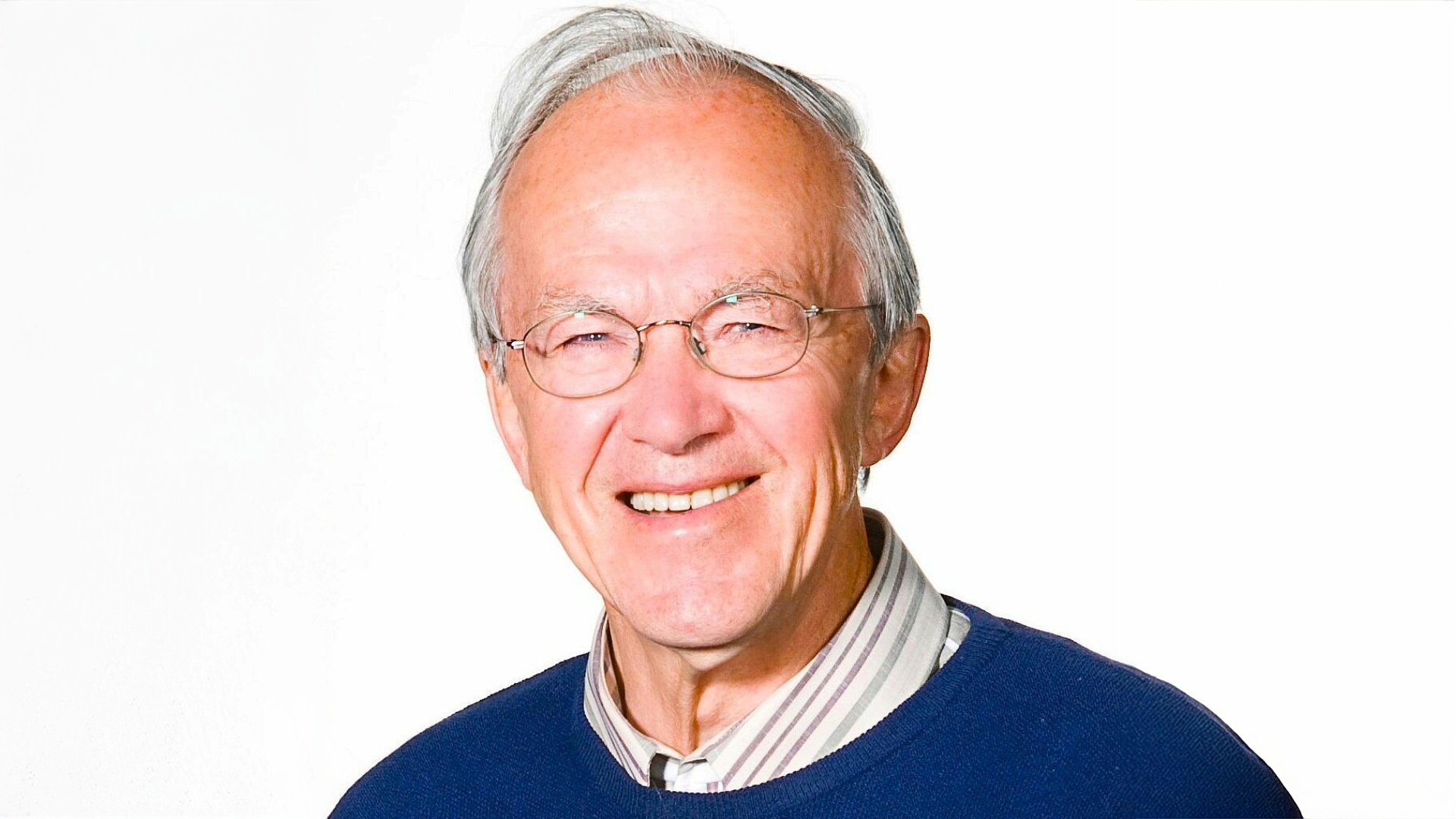
Professor Günter Hotz, founding father of computer science in Saarbrücken, turns 95, Photo: © privat
On 16 November, Günter Hotz, Professor Emeritus of Applied Mathematics and Computer Science, pioneer of computer science in Saarbrücken and Honorary Senator of Saarland University, celebrates his 95th birthday. Hotz, who lives in St. Ingbert, is regarded as one of the founding fathers of computer science in Germany. He was a member of the committee that gave the discipline its German name, “Informatik”, and drafted its first curriculum. He has been closely associated with Saarland University for more than six decades.
Born in Büdingen-Rommelhausen, Günter Hotz completed his Abitur at the Gymnasium in Friedberg and went on to study mathematics and physics at the universities of Frankfurt and Göttingen. He then worked in industry, where he was involved in developing the automation of the postal giro service and the first computer-assisted air traffic control system in the Federal Republic of Germany. In 1962, his career brought him to the Institute of Applied Mathematics in Saarbrücken, headed by Professor Johannes Dörr. Through his commitment, he laid key foundations for establishing the Max Planck Institute for Informatics, the German Research Center for Artificial Intelligence (DFKI) and Schloss Dagstuhl – Leibniz Center for Informatics in the region, thereby playing a decisive role in shaping Saarland and its university as a centre for computer science.
His research focused on areas including computational geometry, formal language theory, and the development of programming languages to support language processing within Collaborative Research Centre (SFB) 100 “Electronic Language Processing”. He was also actively involved in the Collaborative Research Centres that followed.
As an academic teacher, Professor Hotz supervised more than 50 doctoral theses. Around 30 of his former Diplom students, doctoral students and research staff went on to be appointed to professorships at universities and universities of applied sciences. Within the scientific community, Günter Hotz served, among other roles, as founding president of the German Informatics Society (Gesellschaft für Informatik, GI) and as a member of the German Council of Science and Humanities (Wissenschaftsrat) and several scientific academies and societies. In 1986, he also became the first scientist from the Federal Republic of Germany to be elected to the Academy of Sciences of the GDR.
Hotz also served as a reviewer for the German Research Foundation (DFG) and as Dean of the Technical Faculty at Saarland University. His contributions to computer science have been recognized with numerous national and international awards. He holds honorary doctorates from Goethe University Frankfurt, Technische Universität Darmstadt, Tbilisi State University and Paderborn University. In 1986, together with his colleagues Kurt Mehlhorn and Wolfgang Paul, he received the DFG’s Gottfried Wilhelm Leibniz Prize – the first time the prize was awarded to computer scientists.
A recipient of the Saarland Order of Merit and the Commander’s Cross of the Order of Merit of the Federal Republic of Germany, Hotz is also an honorary member of the German Informatics Society, a recipient of the Konrad Zuse Medal, and an honorary professor of the Chinese Academy of Sciences and of Beihang University. His name is also borne by the Günter Hotz Medal, which the association “Freunde der Saarbrücker Informatik e.V.” (Friends of Saarbrücken Computer Science) has awarded to the three best computer science graduates in Saarbrücken each year since 2001, and, since 2011, by the main lecture hall of Saarbrücken’s computer science campus. Saarland University, to which he remained loyal despite prestigious offers from other institutions, also conferred on the doyen of German computer science the title of Honorary Senator on 25 May 2019, during the celebrations marking the 50th anniversary of its Department of Computer Science.
Contact: Dr. Wolfgang Müller – University Archives, E-Mail: dr.wolfgang-mueller@t-online.de