

Computational linguist Michael Hahn awarded the prestigious Heinz Maier-Leibnitz Prize
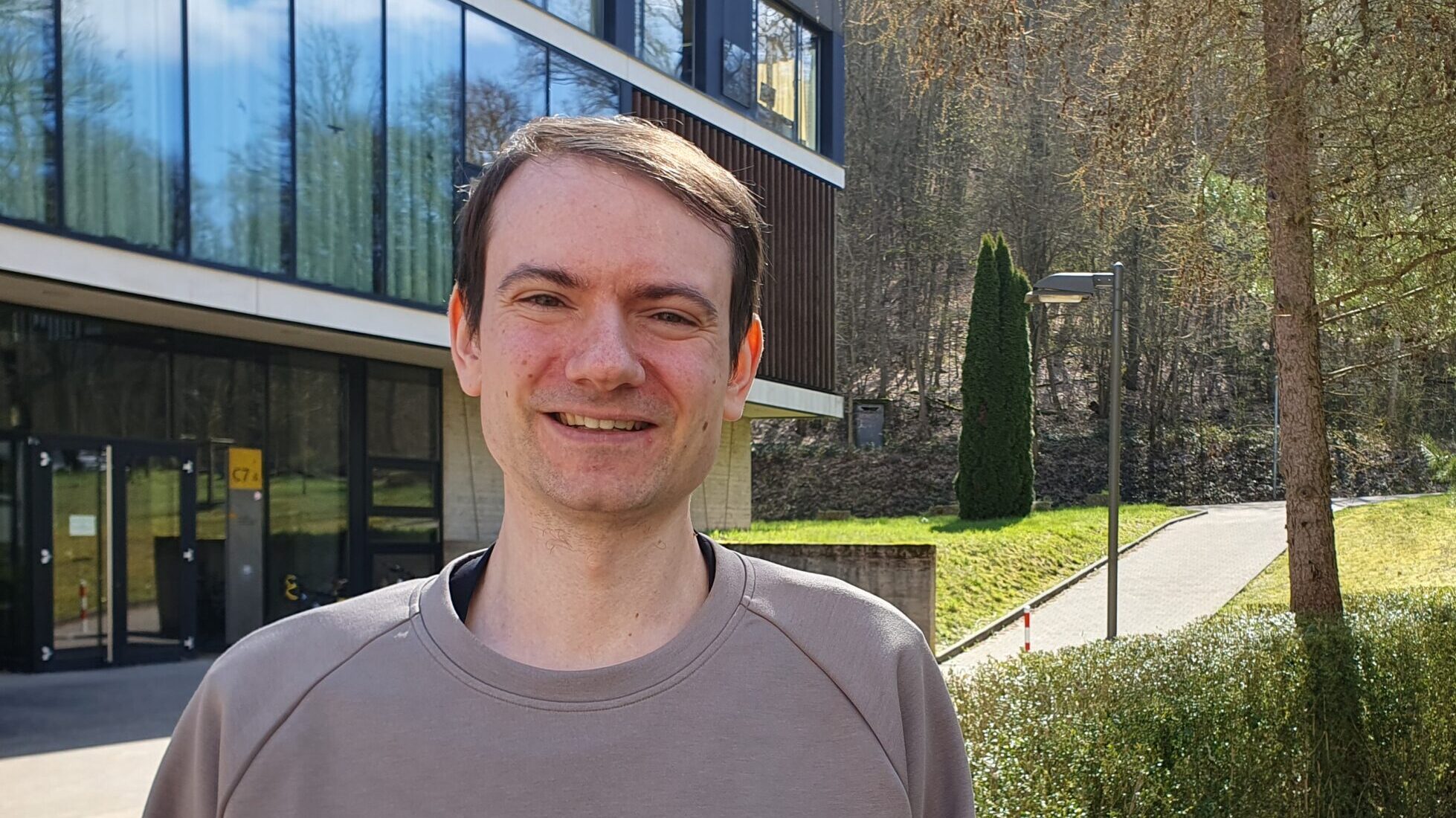
Even the best AI language models — so-called large language models — can be significantly off the mark when it comes to logical questions. In such cases, calculations are incorrect, sequences are reproduced incorrectly, or the AI hallucinates and invents false statistics or quotes. Michael Hahn, a computational linguist at the Department of Language Science and Technology and Computer Science, has already produced promising research results addressing this problem. For this work, he has now been awarded the Heinz Maier-Leibnitz Prize by the German Research Foundation—as one of only ten recipients across Germany to receive the award.
All large language models are currently based on the so-called Transformer architecture. This architecture is modeled after the human ability to focus on relevant information and ignore less important details. Michael Hahn, Professor of Computational Linguistics at Saarland University, was able to mathematically prove that Transformers fail at tasks in which every part of the input is relevant to the output. Thus, changing even a single character can alter the correct result. This allows the computational linguist and his interdisciplinary team at the Saarland Informatics Campus to gain theoretical insights that can be used to better predict the strengths and weaknesses of large language models.
Just recently, Michael Hahn received 1.4 million euros from the German Research Foundation for his research at the intersection of machine learning and computational linguistics, to establish an Emmy Noether Research Group (see press release dated November 13, 2025). The Heinz Maier-Leibnitz Award is considered one of the most prestigious prizes in the German-speaking world for early-career researchers. It is endowed with 200,000 euros, intended to support the laureates in pursuing their scientific careers. The prize is named after the physicist and former president of the German Research Foundation, Heinz Maier-Leibnitz, and has been awarded since 1977.
Background
The Heinz Maier-Leibnitz Prize is considered one of the most prestigious awards for early-career researchers in the German-speaking area. It comes with a prize of 200,000 euros, intended to support the laureates in pursuing their academic careers. The prize is named after the physicist and former president of the German Research Foundation, Heinz Maier-Leibnitz, and has been awarded since 1977.
Background Saarland Informatics Campus
1,000 researchers (including 540 doctoral candidates) from more than 80 nations make the Saarland Informatics Campus (SIC) one of the leading locations for computer science in Germany and Europe. Four world-renowned research institutes, namely the German Research Center for Artificial Intelligence (DFKI), the Max Planck Institute for Informatics, the Max Planck Institute for Software Systems, the Center for Bioinformatics as well as Saarland University with three departments and 24 degree programs cover the entire spectrum of computer science.
Further information:
Press release from the German Research Foundation
Information on the Heinz Maier-Leibnitz Prize
Persönliche Webseite von Professor Michael Hahn: Professor Michael Hahn’s personal website: https://www.mhahn.info
For further inquiries, please contact:
Prof. Dr. Michael Hahn
Chair of Language, Computation, and Cognition
Tel. 0681 302-4343
Email: mhahn(at)lst.uni-saarland.de