

DFKI Researcher Analyzes UN Report on the Environmental Footprint of Artificial Intelligence
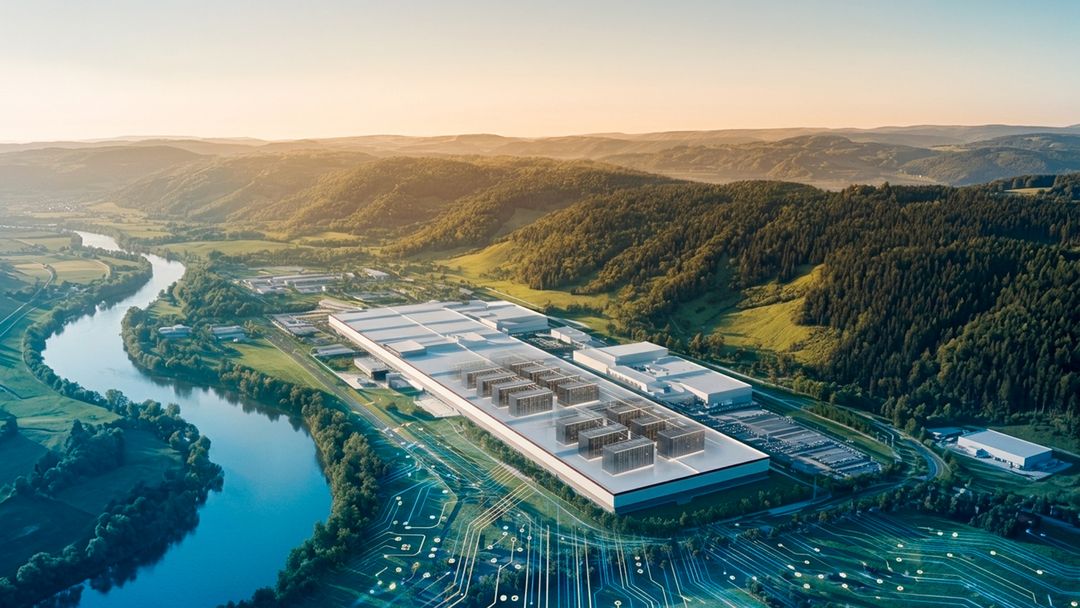
The new UN report on the environmental impact of AI has reignited the debate over data center resource consumption. The focus is on energy demand, water consumption, and CO₂ emissions during the training and operation of generative AI systems. Prof. Dr.-Ing. Wolfgang Maaß, head of the DFKI research division Smart Service Engineering and holder of the Chair of Business Informatics at Saarland University, analyzes the study and points to ESCADE as a concrete approach for greater transparency and efficiency.
The report by the United Nations University (UNU) examines the environmental impacts of artificial intelligence, focusing primarily on generative AI models such as ChatGPT, Claude, and DeepSeek. Among other things, the study examines the resource requirements of data centers for training and operation, as well as the associated CO₂ emissions. As the use of generative AI increases, so does the computing capacity required for inference and training.
Prof. Maaß generally welcomes the debate but is critical of parts of the report. “The report makes a useful contribution by systematically compiling consumption figures for the first time and making them accessible to a broader audience,” he says. At the same time, he emphasizes: “The figures cited in the report are plausible in terms of their magnitude, but difficult to reproduce methodologically.”
Prof. Maaß generally welcomes the debate but is critical of parts of the report. “The report makes a useful contribution by systematically compiling consumption figures for the first time and making them accessible to a broader audience,” he says. At the same time, he emphasizes: “The figures cited in the report are plausible in terms of their magnitude, but difficult to reproduce methodologically.”
This is precisely where the ESCADE project, funded by the Federal Ministry for Economic Affairs and Climate Action, comes in. As part of this project, DFKI is researching energy- and cost-efficient approaches for operating AI applications in data centers. Using the EAVE demonstrator, energy consumption, CO₂ emissions, and operating costs of different model, hardware, and location configurations are made comparable.
In doing so, ESCADE addresses key transparency and decision-making issues that are also relevant in the context of the UN report. The scientific foundations and design principles were described, among other places, in a CAiSE publication on energy- and cost-efficient AI operations. In this way, the project helps not only to discuss the environmental impacts of AI but also to make them measurable and practically comparable.
“The energy consumption of AI data centers is real and growing, but it is not currently the dominant climate issue,” says Maaß. It is therefore crucial to consider technical development, site selection, and regulatory frameworks collectively. Against this backdrop, the question of how AI systems can be designed in the future so that their benefits do not come at the expense of unnecessarily high resource consumption is gaining importance.
The UNU-INWEH report:https://unu.edu/inweh/collection/environmental-cost-of-AIs-Enrgy-Use-Carbon-water-and-land-footprints
Statements on the UN report:https://www.sciencemediacenter.de/angebote/un-bericht-zum-umweltfussabdruck-von-ki-und-rechenzentren-26129
Paper „Towards Decision Support Systems for Cost-Effective and Energy-Efficient AI Operations in Data Centers“: https://link.springer.com/chapter/10.1007/978-3-032-28110-4_22
ESCADE project webpage: https://www.dfki.de/web/forschung/projekte-publikationen/projekt/escade