
News Archive
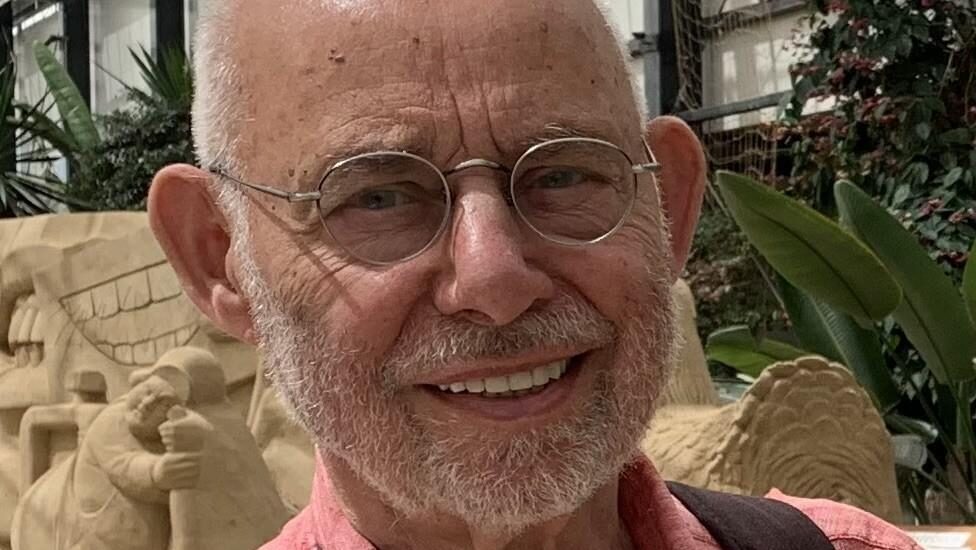
On 5 August, Prof. Dr. Jörg Siekmann will celebrate his 85th birthday. A pioneer of the field of artificial intelligence in Germany, Siekmann served as a professor of computer science at Saarland University and director of the Deduction and Multi-Agent Systems Research Division at the German Research Centre for Artificial Intelligence (DFKI).

Data centres are springing up all over the world – along with power stations designed to satisfy the energy demands of artificial intelligence. A research consortium led by Wolfgang Maaß (German Research Center for Artificial Intelligence DFKI and Saarland University) found ways to reduce AI’s electricity consumption by up to 90 per cent using hardware and software technologies.
Multidrug-resistant bacteria are among the greatest medical challenges of our time. To significantly improve the development of new antibiotics, the German Research Center for Artificial Intelligence (DFKI), Saarland University, the Helmholtz Institute for Pharmaceutical Research Saarland (HIPS), and the biotechnology company smartbax GmbH have launched the collaborative project OptimAIze.The project combines state-of-the-art artificial intelligence methods with innovative biological testing procedures [...]
Saarland University is one of 20 higher education institutions in Germany that has been tasked with attracting top international talent in the fields of artificial intelligence and quantum technologies, with the goal of retaining these researchers in the country long-term and building Germany as a centre of scientific excellence.
The Saarbrücken Computer Science Research Days support the next generation of scientists with lectures, workshops, and insights into current computer science research. From June 24 to 26, 2026, Saarbrücken was once again a hub for young computer science enthusiasts from all over Germany. Since 2008, the Saarland Informatics Campus, as the host of the “Saarbrücker Forschungstage”, has been offering selected high school students the opportunity to delve deeper into the world of computer [...]
Professor Martina Maggio has been awarded an Advanced Grant from the European Research Council (ERC), one of Europe’s most prestigious research funding programmes. With funding of up to €2.5 million, Professor Maggio aims to improve the certification of the safety of computer-controlled systems that are subject to timing fluctuations during operation.
MPI-SWS Scientific Director Rupak Majumdar has been awarded an ERC Advanced Grant worth approximately €2.5 million for his project „Pascal: Formal Performance Analysis at Scale“. The project aims to develop new mathematical foundations and practical tools for analyzing and verifying the performance and resilience of large-scale distributed computer systems.
Teaching humanoid robots not only to see like humans but also to understand what they see is an immensely complex challenge because in the real world, everything is constantly changing. Jan Eric Lenssen wants to teach machines to see, giving them a visual understanding modelled on human perception. On 22 June, Saarland’s Minister of Finance and Science Jakob von Weizsäcker appointed Lenssen to a professorship in computer science at Saarland University.
The ACM Special Interest Group on Programming Languages (SIGPLAN) has awarded their 2026 Distinguished Service Award to MPI-SWS Scientific Director Derek Dreyer. The award [...]
The new UN report on the environmental impact of AI has reignited the debate over data center resource consumption. The focus is on energy demand, water consumption, and CO₂ emissions during the training and operation of generative AI systems. Prof. Dr.-Ing. Wolfgang Maaß, head of the DFKI research division Smart Service Engineering and holder of the Chair of Business Informatics at Saarland University, analyzes the study and points to ESCADE as a concrete approach for greater transparency and efficiency.
Paris/Berlin, 18 June 2026 – The German Research Center for Artificial Intelligence (DFKI) and the French National Institute for Research in Digital Science and Technology (Inria) are taking their existing partnership to the next level: today the two leading research organizations signed an agreement at Vivatech in Paris to establish an open, binational French – German Center on Artificial Intelligence.
The Soofi consortium presents initial performance results for “Soofi S,” the first building block of a European AI model family. The project, funded by the Federal Ministry for Economic Affairs and Energy as part of the IPCEI-CIS / 8ra initiative, aims to develop high-performance foundation models on European infrastructure, offering businesses, public administration, research institutions, and start-ups a transparent alternative to non-European models.
MPI-SWS researchers Travis Hance, Laila Elbeheiry, and Derek Dreyer–along with their collaborator Yusuke Matsushita–have received a PLDI 2026 Distinguished Paper Award for their paper “VerusBelt: A Semantic Foundation for Verus’s Proof-Oriented Extensions to the Rust Type System.”
At the international high-tech and startup trade fair Vivatech in Paris (June 17–20, 2026), the German Research Center for Artificial Intelligence (DFKI) and the French computer science institute Inria will showcase their close research collaboration in the German Park (Hall 7.3, Booth 3E14) and send a strong signal for the future by establishing a Franco-German AI center. The goal is to strengthen high-performance European AI and further advance the transfer of AI technologies to the economy.
MPI-SWS researchers Tung Phung and Adish Singla, jointly with colleagues from the University of Michigan, the University of Minnesota and Microsoft, have received a Best Paper Award at the 57th ACM Technical Symposium on Computer Science Education (SIGCSE TS 2026), for their paper titled Closing the Loop: An Instructor-in-the-Loop AI Assistance System for Supporting Student Help-Seeking in Programming Education. At SIGCSE TS 2026, only 9 papers were given this award out of 174 accepted papers. Congratulations!
31»