

News Archive
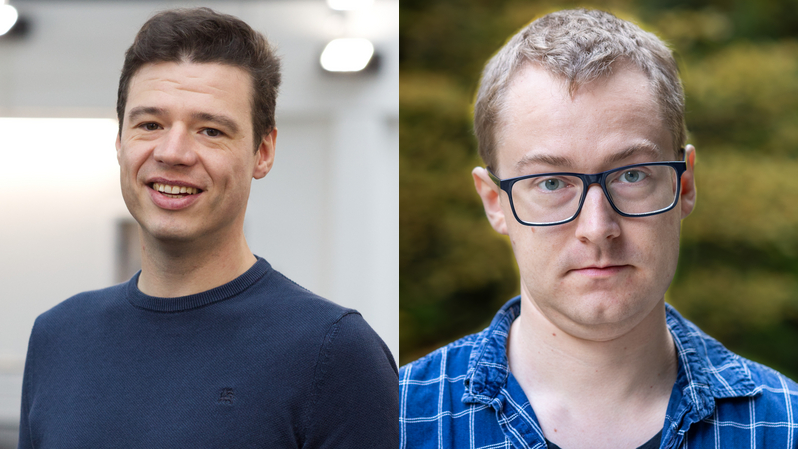
The German Research Foundation (DFG) has admitted two group leaders from the Max Planck Institute for Informatics (MPI-INF) in Saarbrücken into the prestigious Emmy Noether Programme: Dr. Jan Eric Lenssen and Dr. Karol Węgrzycki. The Emmy Noether Program offers outstanding early-career scientists the opportunity to qualify for a university professorship by independently leading a research group for a period of six years. Together, the two researchers will receive around 3.7 million euros in funding.

In Zeiten wachsender regulatorischer Anforderungen und komplexer globaler Lieferketten stehen Hersteller und Händler vor enormen Herausforderungen: Die Einhaltung gesetzlicher Vorgaben zur Produktsicherheit und Nachhaltigkeit – von der europäischen Chemikalienverordnung REACH über die Elektrostoffverordnung RoHS bis hin zu CO₂-Bilanzen und Ökodesign-Anforderungen – ist essenziell, um Haftungsrisiken, Produktionsausfälle und Imageverluste zu vermeiden.
Die Physikalisch-Technische Bundesanstalt (PTB) und das Deutsche Forschungszentrum für Künstliche Intelligenz (DFKI) haben eine Absichtserklärung zur vertieften Zusammenarbeit unterzeichnet. Ziel ist es, den Einsatz von Künstlicher Intelligenz (KI) in regulierten Anwendungsfeldern wie Medizin, automatisiertem Fahren und Robotik sicher, vertrauenswürdig und transparent zu gestalten. Mit der Vereinbarung wollen PTB und DFKI dazu beitragen, dass KI-Systeme höchsten Anforderungen an Sicherheit [...]
The scientist, entrepreneur, and versatile innovator Professor August-Wilhelm Scheer will be awarded the honorary senator title of Saarland University. This is the highest honor granted by the university. It is reserved for individuals who have made extraordinary contributions to the university and society. Media representatives are welcome to attend the awarding of the honorary title on October 17 at 5:00 PM in the university’s auditorium.
Beim Bürgerfest zum Tag der Deutschen Einheit 2025 präsentiert sich die Universität des Saarlandes gemeinsam mit Forschungsinstituten und Partnereinrichtungen sowie dem Universitätsklinikum des Saarlandes. An Info-Ständen werden zahlreiche Forschungsprojekte der Informatik, Medizin und Biowissenschaften sowie des Europa-Schwerpunkts der Universität präsentiert. Zudem gibt es für Kinder und Jugendliche vielfältige Mitmachangebote, bei denen diese auch selbst experimentieren können.
The Gesellschaft für Informatik (GI – German Informatics Society) is awarding Professor Wolfgang Wahlster, long-time Chairman of the Management Board of the German Research Center for Artificial Intelligence (DFKI), the prestigious Konrad Zuse Medal for Services to Computer Science.
An international team of researchers, including mathematician Jonas Haferkamp from Saarland University, has discovered a new phenomenon in the world of quantum physics. States that appear completely random, without actually being so, are generated much faster than previously thought. This could significantly improve many quantum-physical applications. Due to its fundamental importance, the findings were published in the journal Science.
From September 1–5, 2025, the Saarland Informatics Campus will host the internationally renowned Highlights of Logic, Games and Automata Conference. Around 110 to 150 international participants are expected to attend – including leading researchers in logic, games, formal methods, verification, and algorithmic modeling.
You’re starting a computer science–related degree program this coming winter semester at Saarland University (e.g., Computer Science, Bioinformatics, Cybersecurity, Data Science & AI, Business Informatics, or Computer Science for Teaching)? Then the Math Prep Course is just right for you!
Satellite images, social media and barcode scanners in shops offer a wealth of data that has so far been little used in the social sciences. New AI-supported methods are helping with the evaluation, but they require a great deal of IT expertise and legal and ethical consideration. This interdisciplinary expertise is now to be pooled in a competence centre called ‘Societal Observatory Using Novel Data Sources (SOUNDS)’.
Prof. Dr. rer. nat. Dr. h.c. mult. Kurt Mehlhorn, emeritus director of the Max Planck Institute for Informatics, was honored with the Saarland Order of Merit on August 20, 2025, in Saarbrücken. Minister President Anke Rehlinger presented this highest award of the Saarland during a ceremony at the State Chancellery in Saarbrücken.
How can the certification of AI systems help regulate Artificial Intelligence and build trust in the technology? This is the question being explored by German and Brazilian research teams. The project brings together research groups from Saarland University and the University of São Paulo, with funding from the German Research Foundation (DFG) and the Brazilian partner organization CAPES.
MPI-SWS-Fakultätsmitglied Peter Druschel wurde mit dem 2025 IEEE TCDP Outstanding Technical Achievement Award für seine bahnbrechenden Beiträge zum Entwurf und zur Implementierung großskaliger verteilter Systeme ausgezeichnet.
Computer scientist and CISPA faculty Prof. Dr. Andreas Zeller has been awarded an ERC Proof of Concept Grant by the European Research Council (ERC). The grant, totaling €150,000, enables him to transfer the results of his ERC Advanced Grant project “S3 – Semantics of Software Systems” into practical application. In S3, Zeller is developing an intelligent software agent capable of automatically answering complex maintenance-related questions with high accuracy. The project holds the potential [...]
Professor Dr. Dr. h.c. mult. Wolfgang Wahlster, long-standing Scientific Director and current Chief Executive Advisor (CEA) of the German Research Center for Artificial Intelligence (DFKI), has been honored with the prestigious Rudolf Diesel Medal 2025 in the “Best Innovation Promotion” category. This award is considered the oldest innovation prize in Europe and was presented at a gala dinner in Augsburg on 10 July 2025.
27»