News Archive
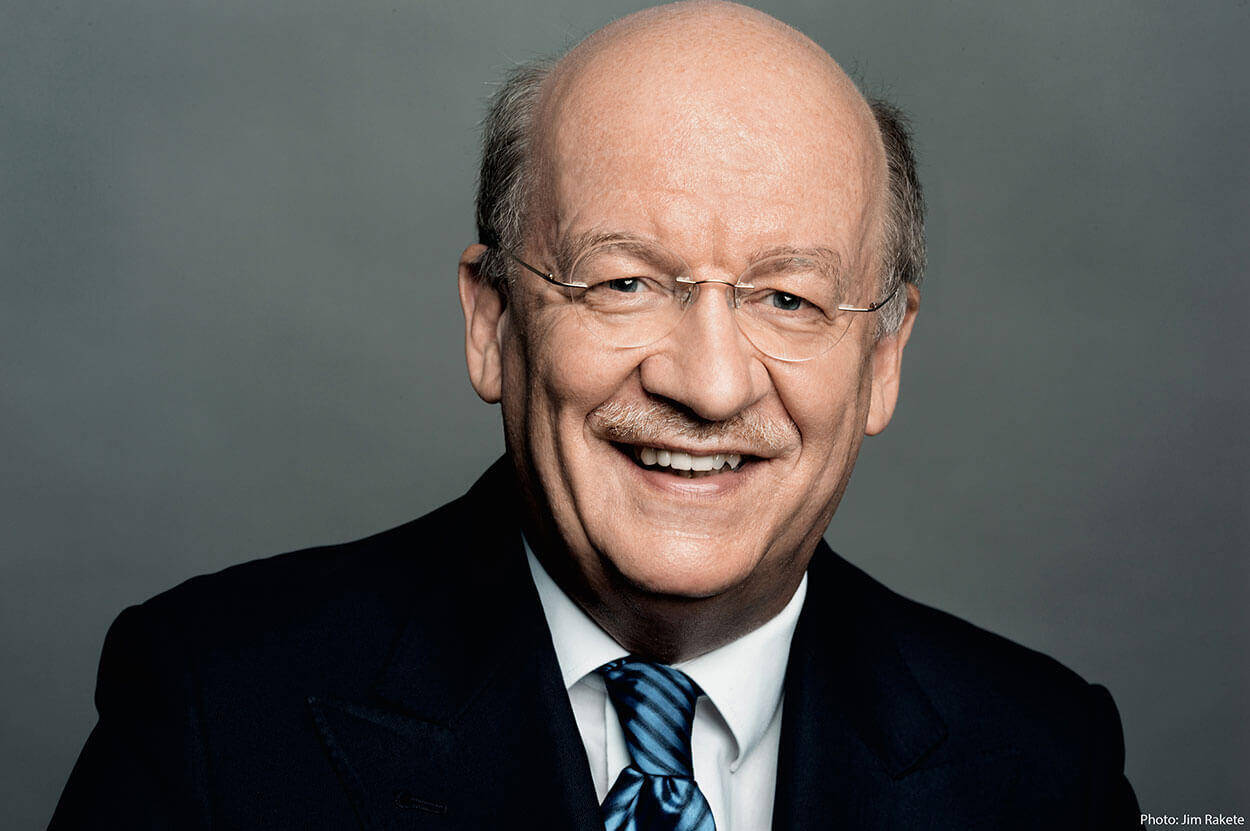
Today professor Wolfgang Wahlster was awarded an honorary title doctor honoris causa during ceremonial assembly of the Scientific Council of the Czech Technical [...]

Ethics and computer science? They belong together! Not only Prof. Holger Hermanns and Kevin Baum see it that way, but also the Stifterverband. The event ‘Ethics for Nerds’ was therefore awarded the Pearl in January 2019. Now there is a chance to win the Pearl of the Year. We need support for this. On 22 and 23 January there will be an SMS voting where your vote counts.
The Department of Computer Science mourns the death of Professor Dr. Jacques Loeckx, who died on January 4, 2020 in Cologne, where he had lived since [...]
Researchers led by the European Molecular Biology Laboratory (EMBL) in Heidelberg and the Center for Bioinformatics at Saarland University in Saarbrücken, Germany, have developed a cheaper and faster method to check for genetic differences in individual cells, which outperforms existing techniques with respect to the information received. This new method could become a new standard in single cell research, and potentially for clinical diagnosis in disease genetics, including cancer. The results have been published in Nature Biotechnology.
The idea is based on a computer science research project at Saarland University and is already supported by the Federal Ministry for Economic Affairs and Energy through an EXIST start-up grant. By tinkering with cardboard animals equipped with sensors that can be programmed via a mini-computer, children can be introduced to the world of programming lines and arithmetic instructions at an early age. CLT Creative Learning Technologies GmbH now offers a new starter set in its own online shop.
More and more people want to be able to adapt their working hours to their individual needs and choose their jobs accordingly. Dynamic and flexible schedules could help, but rarely do. The people in charge of these schedules are quickly overwhelmed, and existing computer programs are not helping enough. This should be changed by new software that uses artificial intelligence to learn from employee assessments. A start-up company of Saarland University wants to reorganize personnel planning and is supported by the IT incubator of Saarland University and the Max Planck Society.
2.93 trillion US dollars’ worth of transactions were carried out in online retailing worldwide in 2018. So-called security protocols form the foundation for this. Christoph Weidenbach, computer science professor at Saarland University and head of a research group at the Max Planck Institute for Informatics, made a scientific contribution to this in 1999, for which he has now been awarded the international Thoralf Skolem Prize. Today, this research is one of the bases for proving security protocols to be safe: no intruder might read or manipulate the content of a communication.
For the third time, students of computer science at Saarland University are taking part in the international “Hour of Code” campaign, which traditionally takes place every year in the second week of December. In order to enable children to try out programming for a whole hour, this year the students visit six schools in Saarland and offer an introduction to programming to a total of 13 classes. During this introduction, the pupils will be motivated by characters from the computer game [...]
In the film “Transcendence” Johnny Depp plays a highly respected scientist whose consciousness is saved on a supercomputer after an attack. Uploaded onto the Internet, he drastically changes the world. The “Kino im Filmhaus” will be showing the 2014 science thriller on Thursday, November 14, starting at 6:30 pm, in its original language and with subtitles. Professor Jörg Hoffmann of Saarland University will comment on the film afterwards. Admission is free. It is the last film in [...]
Gamification is the use of typical elements of a game in a context other than that of a computer game. The application of this concept is as colorful as its definition is dry. The same applies to research on this subject. Both take place in the Saarland. This is why the IT theme evening on November 7 introduced top regional thinkers behind it. 69 people accepted the invitation to the Visualization Center of the German Research Institute for Artificial Intelligence (DFKI) on the Saarland Informatics Campus.
As part of the Federal Ministry of Education and Research’s Science Year 2019 – Artificial Intelligence and the project “#KI50: Artificial Intelligence in Germany – Yesterday, Today, Tomorrow”, the Gesellschaft für Informatik (GI) is awarding prizes to ten scientific talents in the field of artificial intelligence. The deciding factor for the victory is a public online vote, which runs until November 17 of this year.
“How I took over a company with 130 employees and learned to love data retention”, explains Julian Backes, Managing Director of the software house “DIaLOGIKa”, next Wednesday, 6.11.2019, from 16:15, in lecture hall 1 (building E1.3).
Stretchable circuits have the advantage that they also work in textiles such as clothing. However, their production is considered to be very costly. A new, simplified process has now been presented by two computer scientists from Saarland University. It is based on a so-called laser cutter and its precise, fast cuts. These are provided by easy-to-use software developed by Daniel Gröger and Professor Jürgen Steimle for designers. Since the necessary materials are available on the market, almost any person can now produce stretchable electronics for their own purposes.
The Airbus A380 is the largest mass production civilian airliner. When the wide-bodied aircraft lands safely, its control software has launched countless components over 500 cable kilometers in time. The foundations for the automatic analysis of such time-critical software systems, such as those found in cars, trains and industrial plants, are provided by computer scientists from the University of Saarland around Professor Reinhard Wilhelm. For their pioneering work, published in 2001, they were [...]
The number of new students starting at Saarland University is, at over 2,300, currently slightly above last year’s level. In the winter semester, the total number of students at the university is predicted to level out around 16,800. In view of the declining national population, University President Manfred Schmitt regards this as a great success and a proof of the attractiveness and strong performance of the university, which is also reflected by the substantial increase in the number of doctoral [...]
2122232425 ...
30»